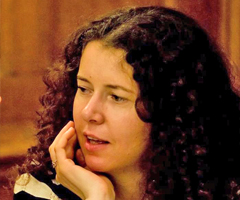
Prof. Chibli Mallat

September 25, 2012 in e-forum presenters

Opening Address

A welcome and a thank you to our presenters and to our participants. Right to Nonviolence will be continuing its assessment of the Tunisian constitutional process with future visits and discussions taking place in Tunisia.

View video

The video cannot be shown at the moment. Please try again later.


Chibli Mallat, Chairman and Founder, Right to Nonviolence

Professor Chibli Mallat is Chairman and Founder of Right to Nonviolence. He is a law professor and a practicing attorney, and an active advocate of human rights, constitutional law, and judicial accountability. He is Presidential Professor of Law at the University of Utah and EU Jean Monnet Professor of European Law at Université Saint Joseph in Lebanon. He was the 2011 Custodian of the Two Holy Mosques Visiting Professor of Islamic Legal Studies at Harvard Law School, and will be Visiting Professor at Yale Law School in the fall of 2012 teaching war and human rights, and Islamic and Middle Eastern law. Mallat has published and edited over thirty-five books, including Introduction to Middle Eastern Law, OUP 2007; and Iraq: Guide to Law and Policy, Kluwer 2009.
Full CV

⇚ Back to the Tunisia e-Forum


Prof. Noah Feldman

September 25, 2012 in e-forum presenters

The Risks of Semi-Presidentialism in Emerging Democracies (with Mr. Duncan Pickard)

The issue of the division of power is the most fundamental unresolved question in the draft constitution. This paper discusses why a semi-presidential system is not suited to Tunisia.

View article
Download article

Noah Feldman, Professor of International Law, Harvard University

Noah Feldman is the Bemis Professor of International Law at Harvard University as well as a Senior Fellow of the Society of Fellows. He is a contributing writer for the New York Times Magazine and the Bloomberg View as well as a Senior Fellow of the Society of Fellows at Harvard University. In 2003 he served as senior constitutional advisor to the Coalition Provisional Authority in Iraq, and subsequently advised members of the Iraqi Governing Council on the drafting of the Transitional Administrative Law or interim constitution. He served as a law clerk to Justice David H. Souter of the U.S. Supreme Court (1998 – 1999). He received his A.B. summa cum laude in Near Eastern Languages and Civilizations from Harvard University in 1992, finishing first in his class. Selected as a Rhodes Scholar, he earned a D. Phil. in Islamic Thought from Oxford University and a J.D. from Yale Law School, serving as Book Reviews Editor  of the Yale Law Journal. He is the author of five books: the recent award winning and acclaimed Scorpions: The Battles and Triumphs of FDR’s Great Justices (Twelve, 2010). The Fall and Rise of the Islamic State (Princeton University Press, 2008); Divided by God: America’s Church- State Problem and What We Should Do About It (Farrar, Straus & Giroux, 2005); What We Owe Iraq: War and Ethics of Nation Building (Princeton University Press, 2004); After Jihad: America and the Struggle for Islamic Democracy (Farrar, Straus & Giroux, 2003).

⇚ Back to the Tunisia e-Forum


Prof. Nathan Brown

September 25, 2012 in e-forum presenters

Islam and Constitutionalism in the Arab World

This audio podcast discusses the relationship between Islam and Constitutionalism since the mid-nineteenth century. It highlights how this relationship has changed in significant ways that is relevant to the current transitional period.

Prof. Nathan Brown interviewed by RN Research Associate Bouchra Chakroune (audio podcast)

Nathan Brown, Professor of Political Science and International Affairs, George Washington University and Non-Resident Senior Associate, Carnegie Endowment for International Peace

Nathan J. Brown, a professor of political science and international affairs at George Washington University, is a distinguished scholar and author of six well-received books on Arab politics. Brown brings his special expertise on Islamist movements, Palestinian politics, and Arab law and constitutionalism to the Endowment. Brown’s latest book, When Victory Is Not an Option: Islamist Movements in Arab Politics, was published by Cornell University Press in early 2012. His current work focuses on Islamist movements and their role in politics in the Arab world.

In 2009, Brown was named a Carnegie Scholar by the Carnegie Corporation of New York; for the 2009–2010 academic year he is a fellow at the Woodrow Wilson International Center for Scholars. In addition to his academic work Brown has served on advisory committees for Human Rights Watch and the committees drafting the Palestinian and Iraqi constitutions. He has also served as a consultant to USAID, the United Nations Development Program, and several nongovernmental organizations.

Selected Publications: Resuming Arab Palestine (University of California Press, 2003); Constitutions in a Non-Constitutional World: Arab Basic Laws and Prospects for Accountable Government (SUNY Press, 2001); The Rule of Law in the Arab World: Courts in Egypt and the Arab States of the Gulf (Cambridge University Press, 1997)

⇚ Back to the Tunisia e-Forum


Ms. Wafa Ben Hassine

September 7, 2012 in e-forum presenters

Gender Justice in Post-Ben Ali Tunisia: Women and Political Participation

This article outlines the challenges of political participation of women in Tunisia’s current institutional arrangement.

View article
Download article

Wafa Ben Hassine, International Law Student and Human Rights Activist

Wafa Ben Hassine is a JD candidate at the University of Denver, Sturm College of Law, pursuing international legal studies. She holds a BA in political science and public law from the University of California, San Diego. Wafa has worked as a parliamentary attaché at the National Constituent Assembly in Tunis, and as a freelance writer and translator. Her research interests include sustainable development (social and environmental) in the global south – particularly in the Maghreb – and studying the legal framework that is emerging in post-Ben Ali Tunisia.

⇚ Back to the Tunisia e-Forum


Ms. Barbora Bukovska

September 7, 2012 in Uncategorized

Tunisia: Freedom Demanded, Freedom Required. The Illegality of Anti-Blasphemy Laws

Article not yet available

Barbora Bukovska, Senior Director for Law and Policy, Article 19

Barbora Bukovska is a Senior Director for Law and Policy at ARTICLE 19, a leading international freedom of expression organization. In this capacity, she leads on development of ARTICLE 19 policies and provides legal oversight and support to all legal work of the organization. Barbora has an extensive experience working with various organisations on a range of human rights issues, including protection from discrimination, access to justice, deprivation of liberty, reproductive rights and community development, including litigation at the European Court of Human Rights. She graduated from the Law School of Charles University in Prague and has earned a doctorate degree in law in Slovakia and an LLM degree from Harvard Law School. In 1998 and 1999, she was a visiting scholar at the Columbia University Law School in New York. Barbora has published widely on human rights issues and is qualified to practice law in the state of New York and in the Czech Republic.

⇚ Back to the Tunisia e-Forum


Mr. Omar Ould Dedde Ould Hamady

September 7, 2012 in e-forum presenters

The Constitution-Making Process in Tunisia: Issues and Challenges

This article focuses on many of the controversial issues that the Constituent Assembly must handle: the political system, the place of international law, Islamic Shari‘a and women’s rights.

Article not yet available

Omar Hamady, Research Fellow, Max Planck Institute for Comparative Public Law and International Law

Omar Ould Dedde Ould Hamady is a Research Fellow at the Max Planck Institute for Comparative Public Law and International Law where he focuses on the Middle East and North Africa. He holds a Master degree in Public international and European Law from Université Paris XI, and a Master in Diplomacy and International organization from the same university. He is a PhD candidate in Public International Law at the University Paris II Panthéon-Assas researching on ”The exercise of powers of the UN Security Council under Chapter VII since the end of cold war”. He has authored articles in many international law journals as well as in the Max Planck Encyclopedia of Public International Law.

⇚ Back to the Tunisia e-Forum


Dr. Mohammed Chafik Sarsar

September 3, 2012 in e-forum presenters

Role of the Judiciary in the Constitutional Protection of State Law

A step by step analysis of the importance of the role of the Judiciary in protecting state law by first understanding what we mean by state law, the conditions of state law, and the meaning and importance behind constitutional jurisprudence.

Download powerpoint presentation

Mohammed Chafik Sarsar, Professor of Constituent Law, Member of the High Commission for the Realization of the Objectives of the Revolution in Tunisia

Dr Mohammed Chafik Sarsar is a lecturer at the Faculty of Law and Politics in Tunis. He is also the Director of the Department of Political Sciences at the Faculty of Law and a member of the Committee of Experts of the High Commission for the Realization of the Objectives of the Revolution, Political Reform and Democratic Transition. He is a Lecturer in Human Rights and Public Freedoms at the Higher Institute of the Judiciary. He has written a number of articles, the most recent of which is titled “Les instances constitutionnelles dans l’avant projet de l’Assemblée” in Journée d’étude organised by the Tunisian Association of Constitutional Law.

Full CV

⇚ Back to the Tunisia e-Forum

Mr. Duncan Pickard

September 3, 2012 in e-forum presenters

The Risks of Semi-Presidentialism in Emerging Democracies (with Prof. Feldman)

The issue of the division of power is the most fundamental unresolved question in the draft constitution. This paper discusses why a semi-presidential system is not suited to Tunisia.

View article
Download article

Duncan Pickard, Constitutional Specialist, Democracy Reporting International

Duncan Pickard is a constitutional specialist with Democracy Reporting International, where he writes on political developments in Egypt, Libya, and Tunisia. He is also a non-resident fellow at the Rafik Hariri Center for the Middle East and a constitutional advisor at Harvard Law School. He has worked in Tunis with the National Constituent Assembly and the International Foundation for Electoral Systems. He is a graduate of Tufts University and Harvard’s Kennedy School of Government. He is based in Berlin.

⇚ Back to the Tunisia e-Forum


Mr. Bassem Karray

September 3, 2012 in e-forum presenters

Acts Organising Provisional Tunisian Public Authorities: Legal Analysis and Political Extension

This article provides a legal analysis of the acts currently governing public authorities and questions the political commitment of the current regime to reform.

View article
Download article

The National Constituent Assembly: Historical Lessons and Contemporary Stakes

Drawing on historical lessons, this article analyses the actions of the National Constituent Assembly and their implications.

View article
Download article

Bassem Karray, Senior Lecturer in Public Law, The Higher Institute of Legal Studies of Gabès, Tunisia

Bassem Karray was a Lecturer in Public Law at the Sfax Faculty of Law until 2011 and now is a Senior Lecturer in Public Law at the Higher Institute of Legal Studies of Gabès, Tunisia. He is a member of the Fiscal Studies Center and Doctoral School of the Sfax Faculty of Law, an associated member of the European Law Laboratory of the Faculty of Legal, Political and Social Science of Tunis and a member of a regional transnational research group (2002-2004) formed by University of Malta and European commission (theme: integration and cooperation between European Union and euro Mediterranean countries). He has taken part in a number of International seminars and has written a host of articles in French and English.

Full CV

⇚ Back to the Tunisia e-Forum


Ms. Chema Gargouri

September 3, 2012 in e-forum presenters

The Role of Civil Society in Tunisia’s Democratic Transition: Public Participation and Consultation

Chema Gargouri discusses the changes in civil society after the fall in Ben Ali; the challenges and successes.

Ms. Chema Gargouri interviewed by RN Research Associate Bouchra Chakroune (audio podcast)

Chema Gargouri, Tunisia Country Director, Women Enterprise for Sustainability

Since 2011 Chéma Gargouri has been acting as Country Director for the Institute of International Education e-mediat and then Women Enterprise for Sustainability; MEPI (US State Department) funded programs that aim at enhancing the strategic use of social media by Tunisian NGOs and the empowerment of women leadership and entrepreneurship. Ms. Chema Gargouri is the manager and major shareholder of the Centre for Applied Training, a business development private company established in 1998. Her areas of expertise are project design and management, SE Business Development, and institutional and capacity building services.

Full CV

⇚ Back to the Tunisia e-Forum


Facebook

YouTube